
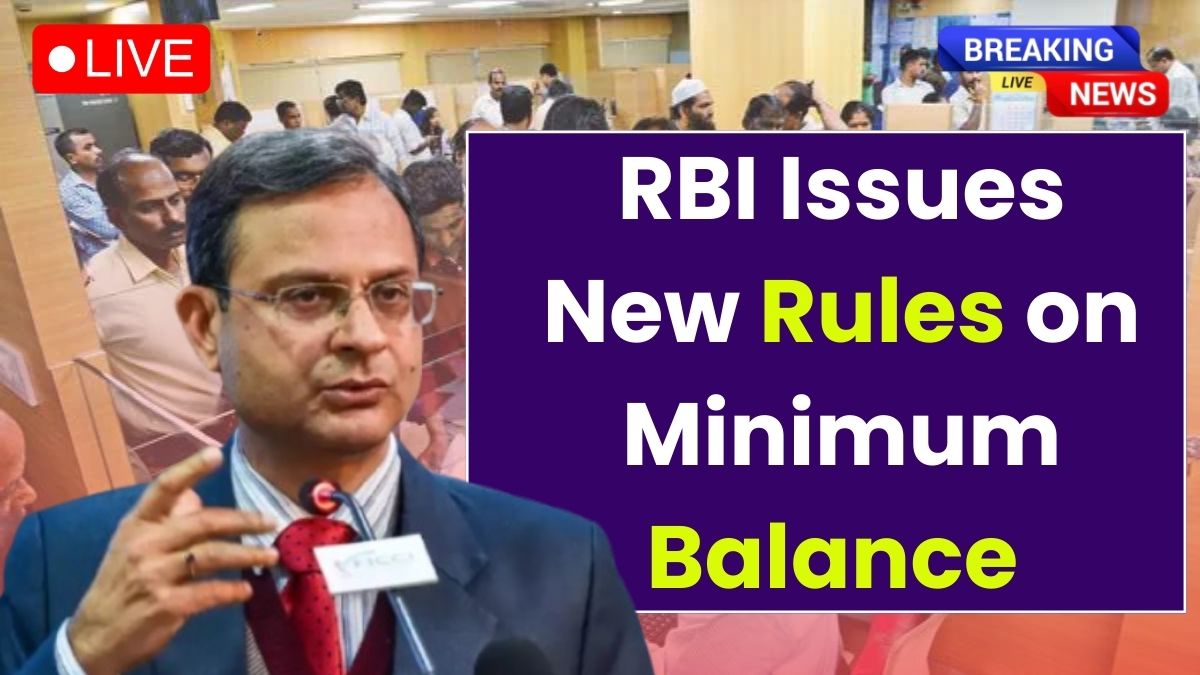
RBI Minimum Balance Rules:In 2026, the Reserve Bank of India introduced new rules regarding minimum balance requirements, aiming to make banking more customer-friendly. For years, many account holders, including students, pensioners, and rural workers, faced unexpected deductions from their savings accounts. These charges often caused confusion and financial stress, particularly for people with limited or irregular incomes. The latest RBI reforms address these issues by introducing clearer rules, capped penalties, and proactive communication from banks.
Why the Reform Was Needed
Minimum balance penalties had long been a common source of complaints against banks. Customers frequently discovered deductions without prior notice, leaving them frustrated and uncertain about their finances. Different banks had varying rules, creating further confusion. Low-income individuals, senior citizens, and first-time account holders were particularly vulnerable. Recognizing these challenges, the RBI implemented the 2026 update to ensure fairness and transparency in how banks manage minimum balance requirements.
Key Principles of the New Framework
The new rules focus on proportionality, transparency, and advance communication. Penalties for falling below the minimum balance must now be reasonable and directly related to the shortfall, preventing arbitrary or excessive charges. Banks are required to clearly explain their minimum balance rules in all documentation and online platforms. In addition, account holders must receive alerts via SMS, email, or mobile banking whenever their balance nears or drops below the required limit. This allows customers time to deposit funds and avoid penalties altogether.

Benefits for Public and Private Bank Customers
Public sector banks, such as the State Bank of India, have reduced penalties and introduced better alert systems, especially for rural and semi-urban customers. Pensioners and other fixed-income account holders benefit from predictable charges and timely notifications. Private banks, including HDFC Bank, are now required to follow the same rules, capping penalties and providing alerts before any deduction. These measures ensure that all bank customers, regardless of the institution, are treated fairly.
Protection for Vulnerable Groups
The reforms include special protections for financially vulnerable groups. Jan Dhan accounts remain exempt from minimum balance penalties. Senior citizens, students, rural workers, and part-time earners now face lenient rules that accommodate their income patterns. Digital banking tools, including real-time notifications and easy fund transfers, help ensure that these protections are effective even for those with limited technology access.
The RBI’s 2026 minimum balance reforms mark a significant step toward equitable banking in India. By capping penalties, improving transparency, and using proactive communication, the central bank has made financial services more accessible and fair. Customers now have greater control over their accounts, reducing anxiety and fostering confidence in the banking system.

Disclaimer
This article is for general informational purposes only. The rules described are based on RBI guidelines and are subject to official notifications. Readers should consult their banks or official RBI communications for the latest and accurate information.