
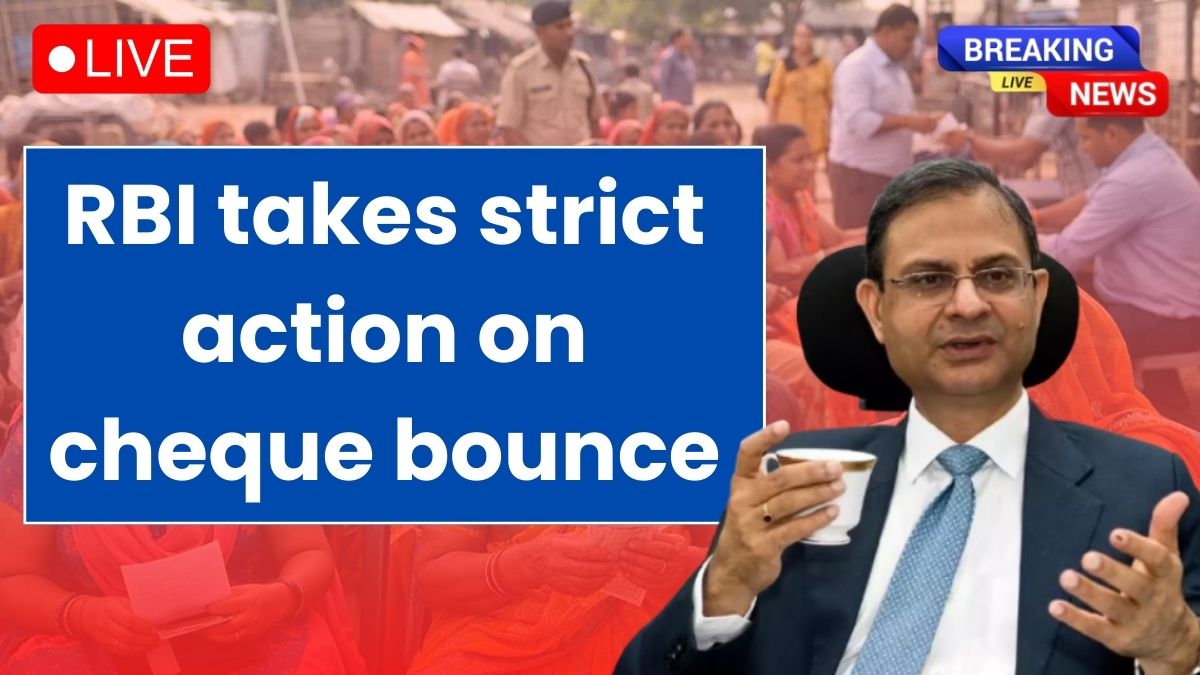
RBI New Rule Check Bounce:The Reserve Bank of India (RBI) has introduced strict new rules regarding check bounces starting in 2026. These regulations are applicable to all account holders, traders, and individuals who use checks for payments. The move aims to increase transparency in the banking system and prevent fraud. Even minor negligence while issuing a check can now result in penalties or other serious consequences, making it essential for everyone to understand the new rules and take preventive measures.
Overview of the New Check Bounce Rules
Under the updated RBI guidelines, banks will take action if a check bounces due to insufficient balance, incorrect signatures, or other technical reasons. For the first instance of a bounced check, the account holder will receive a warning. However, if a person’s check bounces three times consecutively, a fine of up to ₹10,000 may be imposed. In some cases, banks may freeze the account or suspend checkbook privileges. Banks will notify account holders immediately through SMS and email, ensuring that they are aware of the issue and can take corrective action.
Penalties and Consequences
The fine for a bounced check depends on the situation. If a check bounces due to a minor technical issue, the bank will issue a notice and warning first. However, repeated bounces due to insufficient funds will lead to a mandatory fine. Deliberate attempts to bounce checks can result in stricter penalties. High-risk account holders may be restricted from issuing new checks, and repeated violations could affect their banking reputation and creditworthiness.

Impact on Individuals and Businesses
The new rules are likely to have the most impact on small traders and ordinary account holders. Those who use post-dated checks for payments must now be extra cautious. A bounced check can lead to fines and affect one’s banking record. Banks may blacklist repeat offenders, making it difficult to access loans or other banking services in the future. While the regulations may initially seem strict, they encourage timely payments and promote the use of digital payment methods such as UPI, NEFT, and RTGS.
Ways to Avoid Check Bounce
To prevent check bounces, account holders should maintain sufficient funds in their accounts. Before issuing a check, it is important to verify the balance and ensure all details, including signatures, are correct. For post-dated checks, account holders must confirm that the required funds will be available on the date of payment. Adopting digital payment methods like auto-debit, e-mandates, and online transfers can also reduce the risk of bounced checks. Regularly checking bank alerts and promptly addressing issues with the bank will help avoid penalties.
Need for the New Rules
The number of check bounces has increased significantly in recent years, causing losses to traders and burdening courts with disputes. The RBI’s new regulations aim to strengthen banking discipline and protect stakeholders. These rules apply to all public and private banks and are expected to promote financial responsibility and support the growth of a Digital India.

RBI’s 2026 check bounce rules are crucial for account holders, traders, and businesses. Penalties, account freezes, and checkbook restrictions will ensure responsible usage of checks. By following these rules and adopting digital payments, individuals can maintain financial discipline and avoid unnecessary legal or financial issues.