
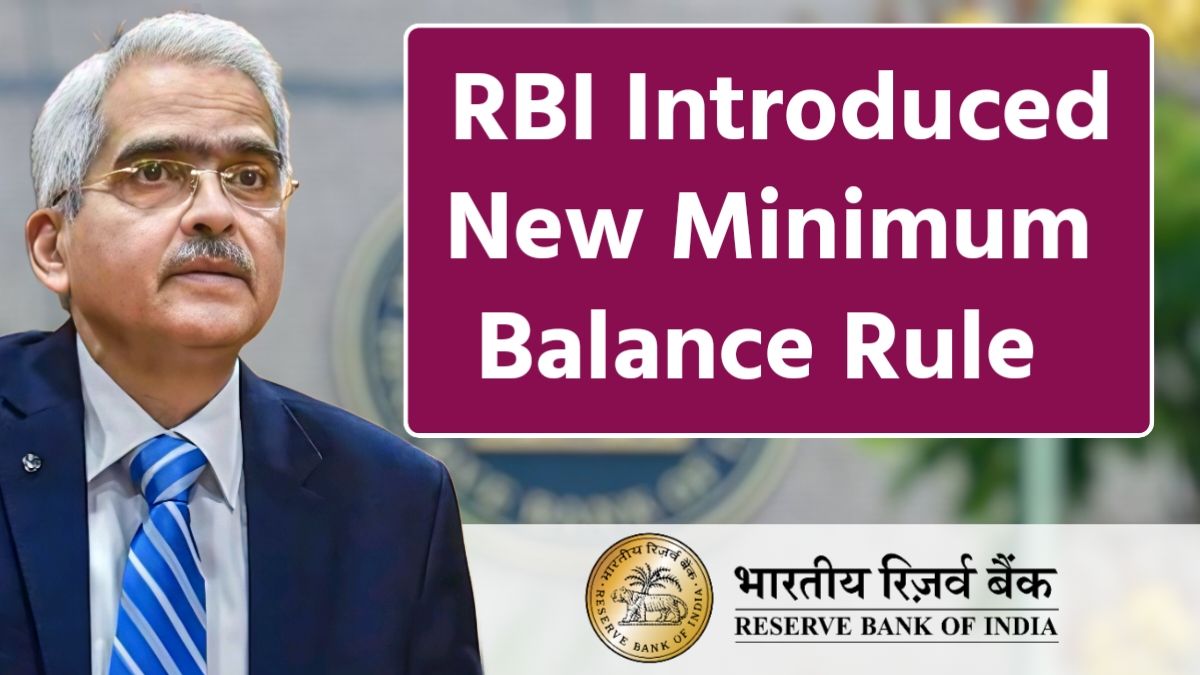
New RBI Minimum Balance Rules:Bank accounts have become a daily necessity for most Indians. Salaries are credited, bills are paid automatically, UPI transactions happen instantly, and subscriptions renew without notice. Because of this constant movement of money, even a small mistake in maintaining balance can lead to unexpected penalties. Keeping this reality in mind, the Reserve Bank of India (RBI) has introduced revised minimum balance rules that will come into effect from January 31, 2026.
These new rules are not about forcing everyone to keep a fixed amount of money in their accounts. Instead, they focus on transparency, clear communication, and shared responsibility between banks and customers.
Why RBI Updated the Minimum Balance Rules
For many years, bank customers complained about unclear minimum balance requirements and sudden penalty deductions. Different branches of the same bank often followed different practices, leaving customers confused and frustrated. Many people only realized the rules after money was deducted from their account as a penalty.

At the same time, banking itself has changed. Today’s banks rely heavily on digital systems, cybersecurity tools, and strict compliance with regulations such as anti-money laundering rules. Even inactive or nearly empty accounts require monitoring and maintenance. According to banking experts, older rules were designed for a less digital banking system and no longer reflected the real cost of maintaining accounts.
The RBI stepped in to bring clarity, fairness, and consistency to the system.
What the New Rules Mean for Savings Account Holders
Under the new framework, the RBI has not set a single minimum balance amount for all banks. Each bank can continue to decide its own limits based on location and account type. In metro and urban areas, minimum balances are usually around ₹3,000, which is not new. What has changed is how clearly banks must communicate these rules.

Banks are now required to inform customers in advance about minimum balance requirements, penalty amounts, and how quickly balances can fall due to automatic payments. With digital spending through apps, subscriptions, and QR payments, balances can drop below the required level without the customer noticing. The new rules aim to prevent surprises by ensuring better alerts and clearer explanations.